Women’s Resource Centre Brings Key Stakeholders Together to Address Systemic Barriers Facing Survivors of Domestic Abuse
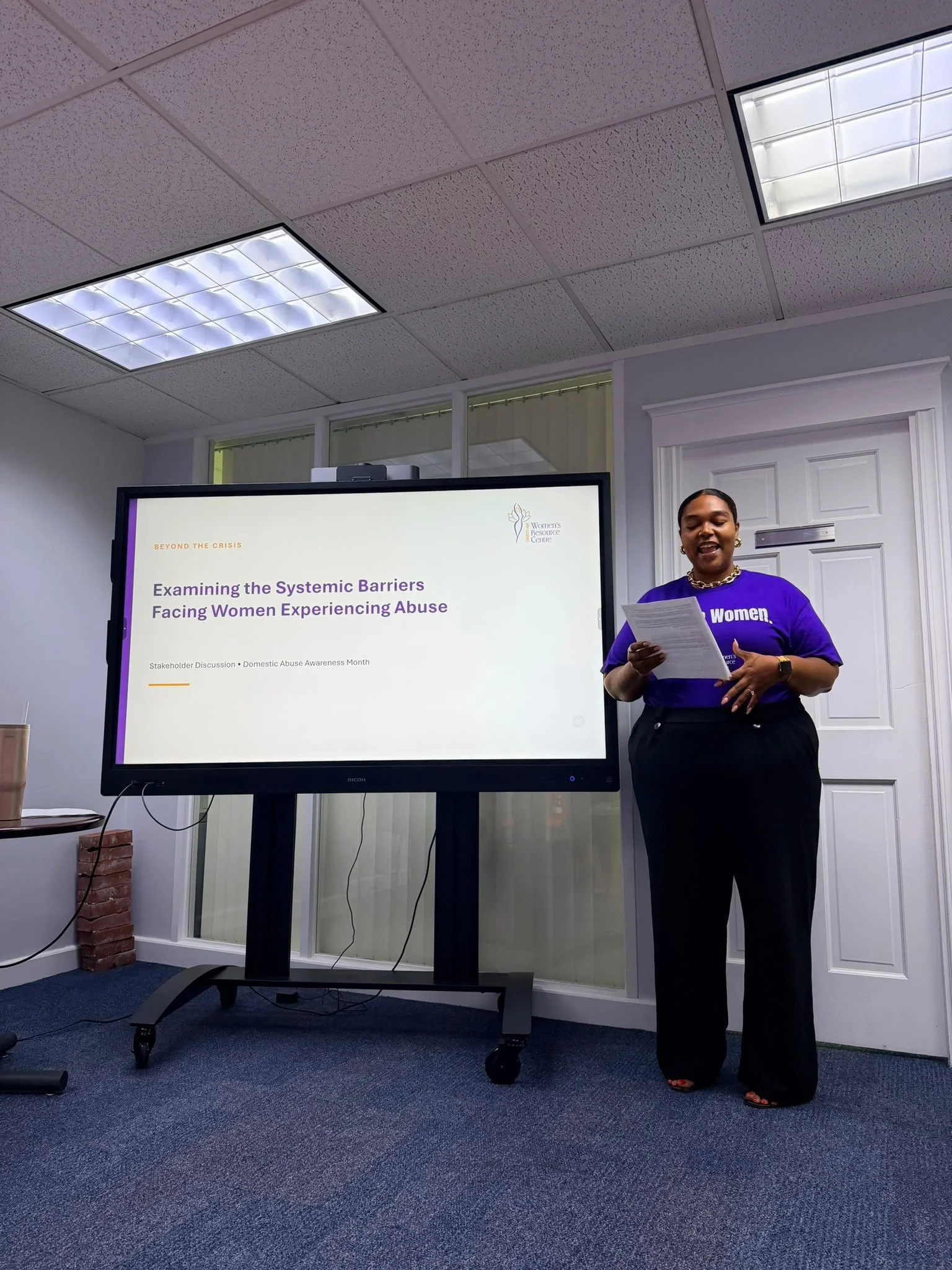
The Women’s Resource Centre (WRC) marked Purple Thursday on 15 October by convening Beyond the Crisis: Examining the Systemic Barriers Facing Women Experiencing Abuse, a stakeholder discussion focused on the realities of domestic abuse in Bermuda, the systemic barriers facing survivors, and opportunities to strengthen support and outcomes for women and families.
The discussion formed part of WRC’s new stakeholder discussion initiative, designed to advance the organisation’s advocacy work by creating space to share insights from clients’ lived experiences directly with legislators, policy makers, law enforcement, community partners and others positioned to influence policy, practice and systemic change.
Through these discussions, WRC seeks to bring the realities identified through its direct service delivery into broader conversations about the systems, policies and practices that shape women’s experiences.
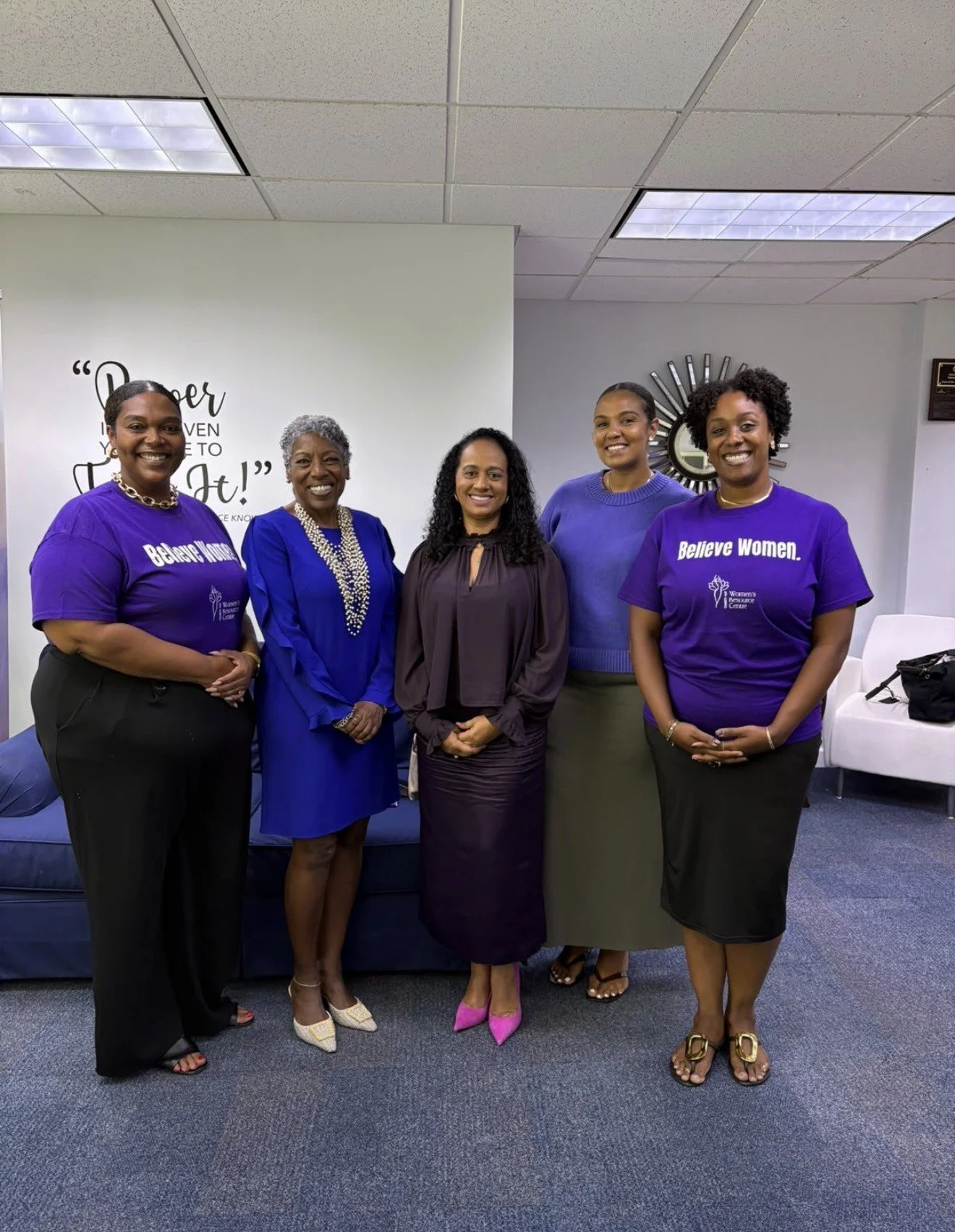
The Purple Thursday discussion was attended by the Hon. Kim Wilson, Minister of Health; the Hon. Tinee Furbert, Minister of Youth, Social Development and Seniors; the Hon. Kim Wilkerson, Attorney General and Minister of Justice; Liana Nanang Omodele, Special Advisor to the Attorney General; Jodi Zuill, Domestic Violence Liaison Officer with the Bermuda Police Service; Dr. Frankco Harris, National Violence Reduction Strategy Development Manager for the Ministry of National Security; Linda Smith, Member of Parliament for the One Bermuda Alliance; and McKenzie-Kohl Tuckett, Women’s and Girls Advocate, among other invited stakeholders.
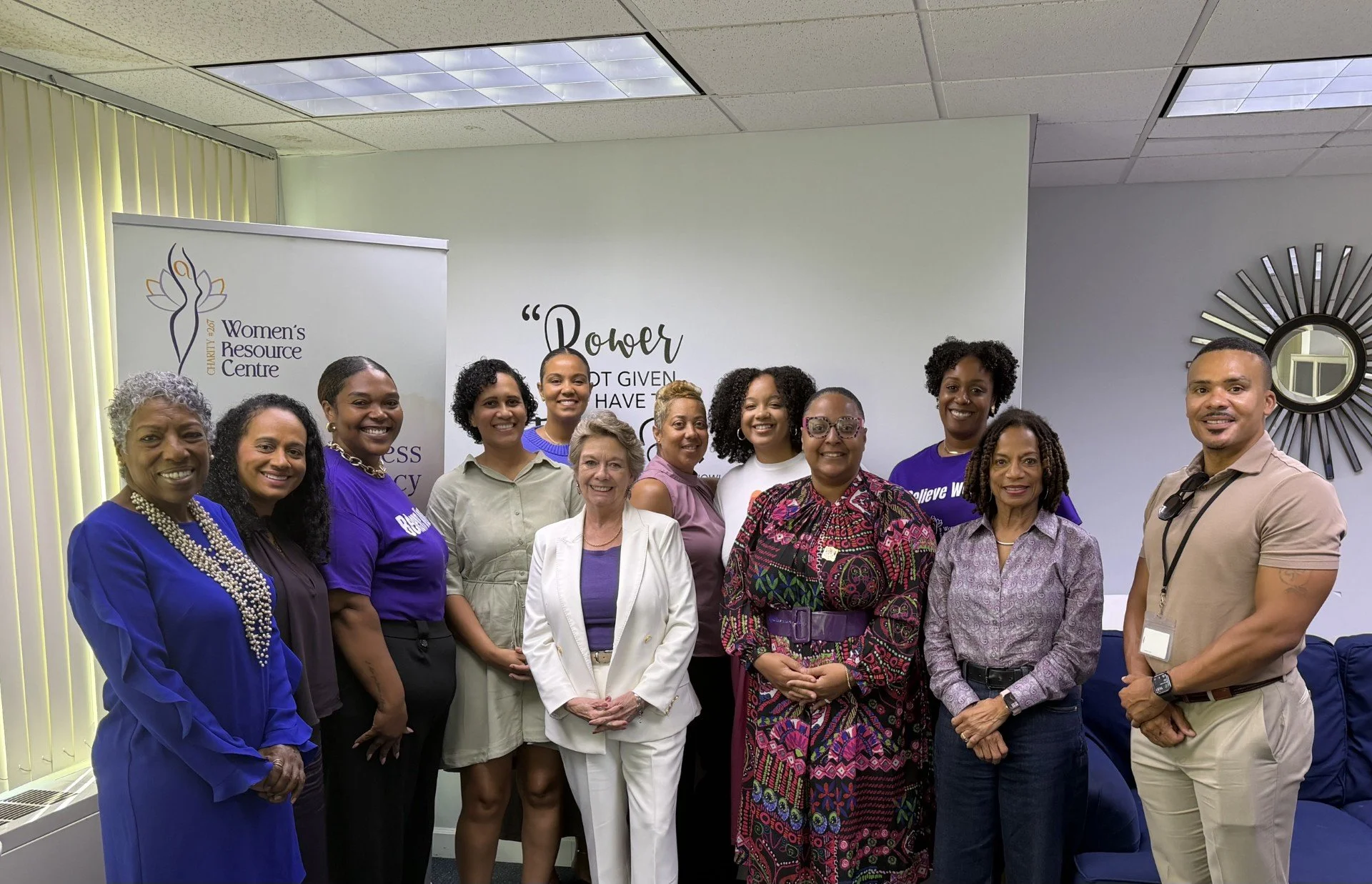
Their participation brought together perspectives from Government, law enforcement, advocacy and community services to consider the complex challenges facing survivors of domestic abuse.
A central feature of the discussion was a presentation by WRC highlighting qualitative insights and recurring themes emerging through its counselling, case management and advocacy services. The presentation incorporated experiences shared directly by WRC clients, ensuring that the realities of women navigating domestic abuse remained central to the conversation.
“One of the most important aspects of our advocacy work is ensuring that the experiences of the women we serve are informing conversations taking place at the policy and decision-making level,” said Juanae Crockwell, Executive Director of the Women’s Resource Centre.
“Through our direct work with women, we are uniquely positioned to see where systems are working, where gaps exist and where additional support or change is needed. Our stakeholder discussions are about bringing those real-life experiences directly to the people who are in a position to influence the systems women must navigate.”
Client Experiences Highlight Interconnected Barriers
The discussion examined several recurring areas of concern identified through WRC’s direct client work, including legal advocacy, Family Court processes, financial insecurity and the cost of living, access to safe and affordable housing, and long-term mental health and therapeutic support.
WRC emphasised that these challenges cannot be considered independently. A woman’s ability to leave an abusive relationship, leave safely and ultimately rebuild her life may depend on several systems and resources functioning effectively at the same time.
Housing was highlighted as a significant challenge, particularly for women leaving abusive situations with children. Limited emergency and transitional housing options can make an already difficult decision considerably more complex, particularly when combined with financial pressures and the practical responsibilities of caring for a family.
The discussion also considered the experiences of survivors navigating Family Court proceedings where domestic abuse has been a feature of the relationship. WRC highlighted the importance of recognising histories and patterns of abuse when considering custody, access and arrangements affecting children.
For women who share children with an abusive former partner, separation may not necessarily end abusive behaviours. Continued contact through parenting arrangements, legal proceedings and financial responsibilities can create opportunities for ongoing coercive control, intimidation or other forms of harm.
“One of the recurring themes we see is that leaving an abusive relationship does not necessarily bring an end to the challenges a woman faces,” Ms. Crockwell added.
“A woman may make the decision to leave but have nowhere safe or affordable to go. She may separate from her partner but still have to navigate Family Court, financial dependence, co-parenting arrangements and the longer-term impact of trauma. These are interconnected issues, and our response to domestic abuse has to recognise that complexity.”
The discussion reinforced the need for trauma-informed approaches across the systems survivors interact with and for domestic abuse responses to extend beyond immediate crisis intervention to consider the conditions necessary for long-term safety, recovery and stability.
Walking Through the Client Journey
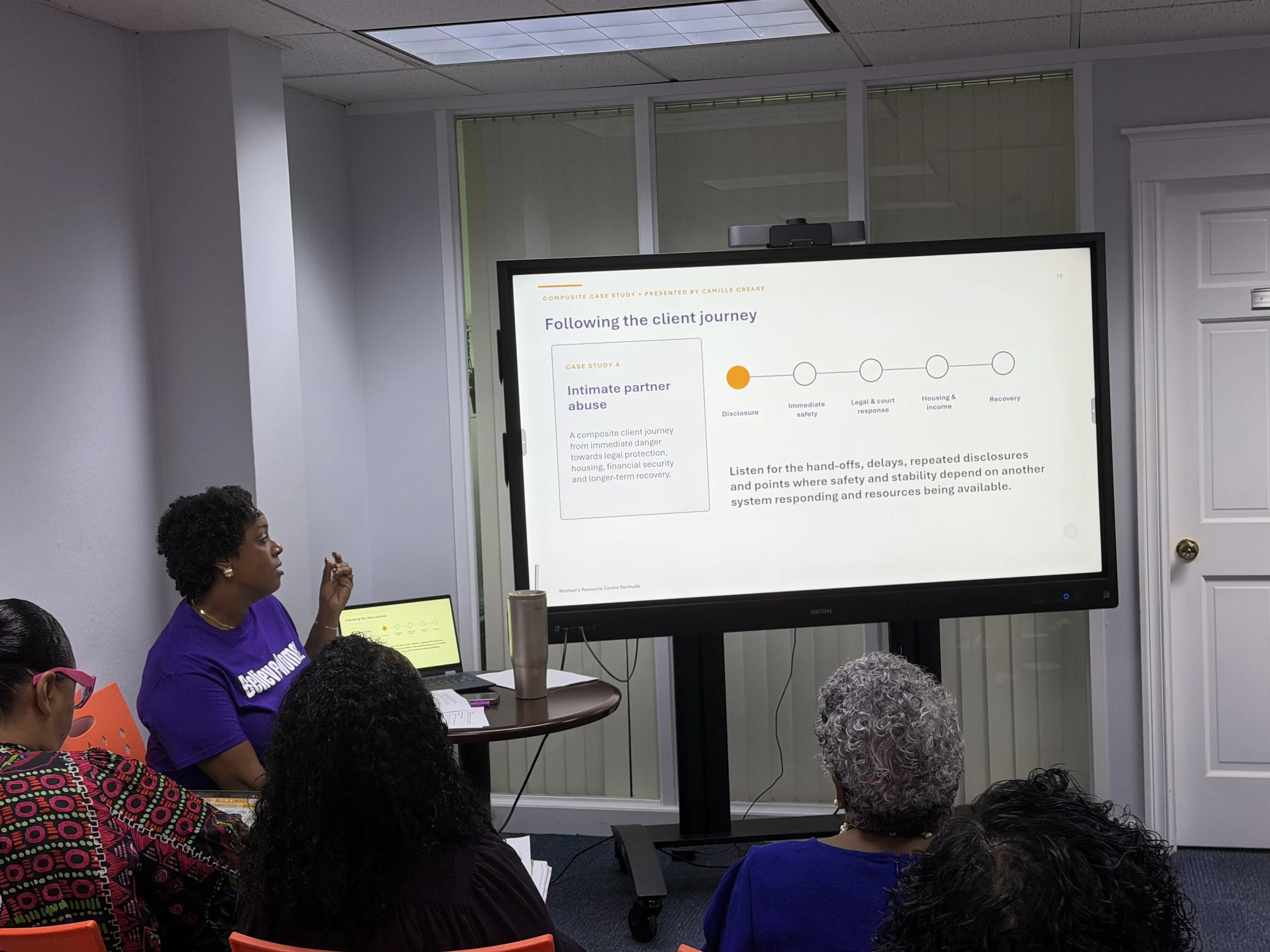
The stakeholder session also included a composite case study led by WRC Case Manager Camille Creary.
Attendees were walked through the journey a survivor may take from disclosure and immediate safety through legal and Family Court proceedings, housing, financial security and longer-term recovery.
The exercise invited participants to consider the journey from the client’s perspective, including hand-offs between agencies and professionals, delays, repeated disclosures and points where the survivor’s ability to move forward depended on another system responding or an appropriate resource being available.
The case study also provided an opportunity to identify where systems intersect, where gaps can increase risk, and where changes in policy, practice, coordination or resources could strengthen support.
A central message emerging from the discussion was that leaving is often only the first threshold. Sustainable safety requires more than separating from an abusive partner. It also requires access to the legal, financial, housing and therapeutic supports necessary for a survivor to recover and rebuild.
Advancing Advocacy Through Collaboration
The discussion reflects WRC’s commitment to using its position as a frontline service provider to inform policy conversations and advocate for changes grounded in women’s lived experiences.
WRC also acknowledged the important work already being undertaken across Bermuda by Government, law enforcement, service providers, community organisations and individual advocates, including the Government’s work to develop Bermuda’s Domestic Violence Strategy.
“Our intention is not simply to identify problems,” Ms. Crockwell said. “It is to bring forward what women are experiencing so that we can collectively consider where improvements can be made.”
“Many organisations and individuals are already doing important work to support victims and survivors. These conversations provide an opportunity to connect that work, identify gaps and ensure that the experiences of women themselves are helping to inform the way forward.”
WRC expressed its appreciation to all stakeholders who participated and reaffirmed its commitment to continuing these discussions as part of its broader advocacy and systems-change work.
Supporting Survivors Beyond Purple Thursday
As Bermuda continues to observe Domestic Abuse Awareness Month throughout October, WRC is encouraging the community to move beyond awareness towards meaningful action in support of victims and survivors.
Alongside its advocacy work, WRC provides therapeutic counselling, individualised case management, advocacy and practical support to women experiencing domestic abuse and navigating its ongoing effects.
These services help women address trauma, navigate complex systems, access community resources and overcome practical barriers to safety, recovery and long-term stability.
“Domestic Abuse Awareness Month gives us an important opportunity to deepen our understanding of abuse and the experiences of survivors, but awareness alone is not enough,” Ms. Crockwell said.
“Every day, women turn to the Women’s Resource Centre for support as they navigate incredibly difficult circumstances. Sustaining that support requires the continued commitment of our community.”
WRC is inviting individuals, businesses and community organisations to recognise Domestic Abuse Awareness Month by supporting its survivor services.
“When you support the Women’s Resource Centre, you help ensure that women experiencing domestic abuse have somewhere to turn, someone to advocate alongside them and access to the support they need to move forward,” Ms. Crockwell added.
“We all have a role to play in creating a Bermuda where women are safe, supported and treated with dignity.”